
Today we rose early (5:45), showered, ate a fantastic breakfast, and hit the road just after 7. I experienced our thirty-six teacher count off for the first time as we all got comfortable on our coach bus, gearing up for our three hour drive. We drove to Lublin, Poland which is southeast of Warsaw to visit the Majdanek concentration camp. (pronounced "mah-don-neck")
Click below to see pictures of Majdanek - explanation of many of the pictures may be found within my blog as well:
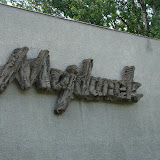 |
| Lublin, Poland - Majdanek Concentrat |
Majdanek was initially a camp designed to hold Soviet POW's, as the road through Lublin that runs directly beside the camp was the main supply line to the Nazi's Eastern Front. The camp ended up housing a combination of Soviet prisoners, Poles, and Jews from Poland and other countries occupied by the Nazis. After the “Aktion Reinhard” - which was essentially the official decree for the Final Solution, late 1941/early 1942, the camp began receiving Jews and was converted to a killing center for not only Jews, but also prisoners who were too weak to work. By September 1942, the gas chambers were operating. One distinctive day in the camp occurred in November of 1943. After a group of Jews led an uprising in Soibibor – another death camp in Poland, Himmler became very nervous and initiated “Operation Harvest Festival.” In one day 18,000 Jews were forced to lay in ditches and were all shot to death – this occurred across several of the camps – and the SS kills 42,000 Jews in one day (November 3rd).
Our trip to Majdanek was fairly pleasant, Stephen Feinberg discussed some pertinant details about our visit – as did our other guide, whose name escapes me at the moment – but he is a very nice man who led our tour through the camp and is fluent in both Polish and English. He lost quite a few family members during the Holocaust. Both spent a large part of our three hours telling different stories and prepping us with various information.
The Majdanek camp is just on the other side of Lublin – it's actually eery how close the camp and the city are to each other. So we were looking at the urban environment, Lublin castle, trees, and this large, ominous, concentration camp suddenly emerges – as far as you can see. The suddenness with which we were looking at urban environment to suddenly staring at a death camp that killed over 300,000 people took our breaths away. The watchtowers, the barbed wire, the open fields, the rows of barracks – it was haunting.
We visited the reception area and watched a brief video that included pictures background information about the camp...and then we set out. Our guide led us through the first building as we entered the camp, saw the field where they tore children from their mothers and wives from their husbands, and entered the building labeled “Disinfection.” The first room was where they cut off everyone's hair so they could sell it – the German's made money by the kilogram of hair – which was then used to create other military supplies. The second room was used to cleanse the victims. The third was a disinfectant room so that clothing could be disinfected and shipped bac into the Reich...and then there were two doors. You either exited to become one of their slave laborers or you proceeded further back into the building to be exterminated. The gas chambers had pipes to pump in carbon monoxide, and also had the ability to drop Zyklon B pellets in... I am not really sure what else to say about looking at a thick, dark, heavy, ominous door that was used to enclose the victims in a room...or what to say about looking into a room that essentially is a concrete box, a trap, and how it felt to know that thousands of people were shoved into the dark box, naked and shivering...terrified, only to see the dark ominous door close....
We were given a while to walk through the camp and all did so at our own leisure, transitioning from historian who clicked away at the camera, to emotional human being who could imagine what individual the artifact may have belonged to... Several of the barracks contained museum like information. Maps, photographs, basic explanations, samples of prisoners uniforms, etc. We walked through the first two barracks processing the information. The third barrack hit hard. As your eyes adjusted to the light, you realized that the barrack was full of bins of shoes. The shoes were brownish/black b/c when the Soviet government turned the camp into a state museum in 1947, they sprayed all the shoes with a oil based preservative to make them last...so there was a distinct smell in the room that we later learned was the preservative mixed with shoe leather.
The room of shoes was most difficult for me. I saw small ones that belonged to little kids... A few shoes had maintained their color and in a pile of brown/black lay one distinctive red one – it was probably the young woman's favorite. I imagined how big a pile it would make if all the kids in one of my classes took off their shoes and piled them...and then multiplied and multiplied...I couldn't begin to figure out how many schools worth of people were within the room. I was choked up. And then I stumbled upon two shoes on top of a pile that were side by side – a small one that looked like it belonged to a young boy, alongside the shoe of a woman – a mother....the shoes to me represented a mother and young son side by side. On my way out of the barrack I saw a mother with her arm around her elementary age son, talking him through each aspect of the camp… that was it for me – I was off to the field to walk it off.
We also were able to walk in a few barracks that still contained all the bunks with straw beds and coarse cloth.. Between 500 and 800 people slept in each barrack, which was difficult to fathom as claustrophobia abounded.
To be continued…


No comments:
Post a Comment